Jennifer Garibay shares how weakness can open doors to gospel conversations, deeper connection, and compassionate care.
I cried in front of a new friend for the first time, and every instinct in me wanted to hide.
It had been an intense weekend emotionally, and somewhere between tiredness and homesickness for my family in New Jersey, I was overcome with sadness. I wasn’t crying graceful tears either. Red nose, puffy eyes, trembling voice, the whole lot.
As soon as the tears started, so did the embarrassment. I immediately wanted to apologise, hide my face, laugh it off, and make it all seem smaller than it was. My friend responded with nothing but kindness, encouragement, and loving care. There was no judgement, no awkwardness, no frustration. Yet despite that, I still felt pathetic and weak for crying.
"As soon as the tears started, so did the embarrassment."
What struck me afterwards was this: if the situation had been reversed, if my friend had been the one crying in front of me, I wouldn’t have thought less of them. In fact, I would have felt honoured by that vulnerability. I would have wanted to comfort them, listen to them, and sit with them in their sadness. I would have seen their tears not as weakness, but as trust.
When it was me, though, vulnerability felt exposing. Weak. Something I should hide.
I think many of us know that feeling.
At Webber Street Homeless Day Centre in Waterloo, vulnerability is something I think about often. Every day, we open the Bible with our guests and speak about Jesus Christ, the God who sees us, knows us, and loves us.
Some guests hear the gospel for the first time. Others have heard it every day for years. Time and time again, I’ve noticed that some of the moments where people seem to connect most deeply are the moments when staff are willing to speak honestly about their own struggles, grief, fears, or weakness. There is something deeply disarming about vulnerability.
Mental health struggles are often accompanied by shame. We convince ourselves that sadness, anxiety, grief, or loneliness are things to hide. Even when people ask how we are doing, many of us instinctively minimise what we are carrying. Vulnerability, however, has a way of pulling people out of hiding too.
Perhaps that makes sense, because at the heart of Christianity is already an act of vulnerability. To become a Christian is to admit that we are not self-sufficient. It is acknowledging our need for grace, forgiveness, and a Saviour. Salvation begins with honesty.
This Mental Health Awareness Week, here are a few things I’ve learned about vulnerability through life and ministry at Webber Street.
1. Vulnerability can lead to gospel conversations
I remember sitting with Brian, a guest who had been coming to Webber Street for some time. He was quiet and often withdrawn. One morning, one of my colleagues gave a talk and spoke openly about struggles he had faced in his own life.
Afterwards, Brian turned to me and said, “It’s obvious that those of us who come here have problems. But it never really occurred to me that you lot might have struggles too.”
Something about that honesty changed the way he listened. Sometimes vulnerability helps people realise that Christianity is not about pretending to have everything together. It reminds people that the gospel is for struggling people, broken people, hurting people, and people in need. The gospel is for all of us.
2. Don’t expect vulnerability to always create connection, but recognise that it can
Another guest, Wendy, came in one morning in a terrible mood and clearly wanted nothing to do with me. Every attempt at conversation fell flat. That morning, I was due to give the talk, and I chose to share openly about a bereavement I was walking through and the grief I was carrying. As soon as the talk finished, Wendy came straight over, took my hands, and thanked me for sharing. The same person who had been closed off minutes earlier suddenly wanted to talk, connect, and ask how I was doing.
It’s important to say this: Wendy was one person in a room full of people. Most people in the room didn’t visibly respond at all.
Sometimes vulnerability creates connection. Sometimes it doesn’t.
Sometimes people will meet honesty with warmth. Other times they may not know what to do with it. Vulnerability is not a formula that guarantees closeness or understanding. That does not make it pointless. Often, the simple act of being honest helps create a culture where others feel safer being honest too.
3. Receive vulnerability gently
Vulnerability feels risky because there is always the possibility that it will be met with judgement, awkwardness, or more shame. When someone opens up to us, we do not always need to respond with perfect advice. Often, the most important things we can do is listen well, respond kindly, and help them feel safe rather than ashamed. Sometimes a simple, “Thank you for being honest with me, let’s pray together about this”, can mean more than we realise.
4. Vulnerability requires wisdom
At Webber Street, we often tell volunteers that vulnerability does not mean telling everyone everything about your life. Not everyone has earned access to the deepest parts of your heart.
Wisdom matters. Boundaries matter.
There is a difference between healthy openness and feeling pressured to overshare. Being vulnerable does not mean removing all discernment. Sometimes vulnerability simply means being honest enough to say, “I’m struggling” or “I know suffering”, without feeling the need to explain every detail. Jesus himself showed openness and compassion, but he also exercised wisdom in who he entrusted himself to. We can do the same.
5. Care for yourself after being vulnerable
Vulnerability can be emotionally exhausting. After opening up about grief, sadness, loneliness, or mental health struggles, it is common to replay conversations in your head and wonder whether you shared too much. Thoughts like, “Why did I say that?”, “Did I just make things awkward?”, or “Have I ruined this?” can easily begin to spiral through our minds. Even healthy vulnerability, like saying ‘I love you’ for the first time or sharing openly about your faith, can leave us feeling exposed afterwards.
That does not mean vulnerability was a mistake. It means you shared something real. After vulnerable moments, care for yourself well. Spend time with trusted people. Rest. Pray. Give yourself space to breathe. Remember this too: vulnerability may feel weak, but it is incredibly brave and courageous.
In 2 Corinthians 12:9, Jesus says, “My grace is sufficient for you, for my power is made perfect in weakness.”
The world often teaches us to hide weakness at all costs. The gospel tells a different story. God is not ashamed to work through weakness, grief, struggle, or need. Sometimes the very things we most want to hide are the things God uses most powerfully.
Perhaps this Mental Health Awareness Week, one of the best things we can do is stop pretending that we are always okay. Honesty has a way of disarming people. Our willingness to be vulnerable could become the very thing that allows someone else to care for us, while also helping another person feel less alone in their own struggles. Sometimes vulnerability is the very thing God uses to soften hearts, deepen relationships, and point people towards Him.
Thank you for praying!
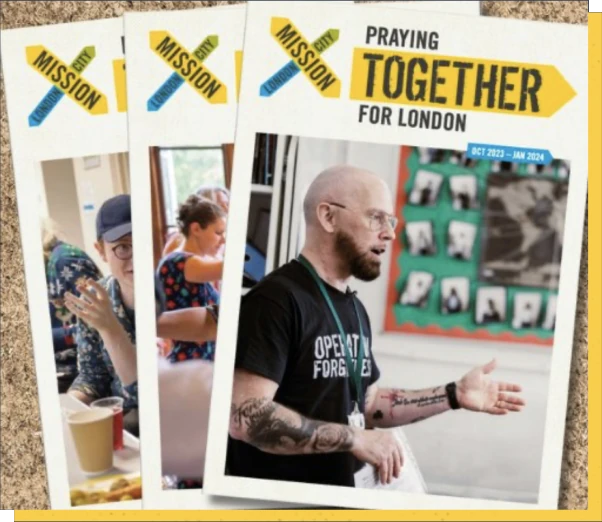
We would love to send you our free prayer guide, Together, where you
can get to know the and pray with the missionaries sharing the gospel
across London.
Sign up now