



Growing up in poverty, surviving abuse, and spending years calling herself a Christian without truly knowing Jesus, Anne lived most of her life on the margins. Today, she is reaching others on the edges of society with the hope of Jesus.

Growing up in poverty, surviving abuse, and spending years calling herself a Christian without truly knowing Jesus, Anne lived most of her life on the margins. Today, she is reaching others on the edges of society with the hope of Jesus.
Anne Croney’s childhood was spent in Silvertown’s slums near the Tate & Lyle sugar refinery, where her father worked. They were the last family to be moved out in the 1960s to a nearby estate.
“But you didn’t notice the poverty when you were younger because it was life for so many of your friends as well.”
Her family of ten shared half a house. Her father struggled with alcoholism, and her mother stretched every penny to keep eight children fed.
“But you didn’t notice the poverty when you were younger because it was life for so many of your friends as well.”
Life grew more difficult early on. Anne became a mother at 15, married before turning 17, and spent ten years in a violently abusive marriage.
“He split my head open, dislocated my jaw… he punched me daily. I knew if I stayed, he would kill me,” Anne recalls.
When she finally escaped, she was left raising her children alone and living on unemployment benefits.
“People look down on you when you’re on benefits,” she says. “But they don’t know that anyone can be a step away from relying on it.”
Although Anne’s parents believed in God, faith was never spoken about or actively lived out at home. Jesus was not discussed, the Bible was not taught, and there was no sense of discipleship.
Anne’s only contact with church as a child was a brief, negative experience at a local Sunday School, after which she never returned.
“My mum sent us there… probably for some peace more than anything else,” she says.
“I remember being really upset when I was separated from my older brother into another class. I was crying, saying I didn’t want to go. The teacher was not understanding at all, and I didn’t go back.”
Anne never intended to go to church later in life. It happened almost accidentally. One day, her nine-year-old daughter said she wanted to go to Sunday school.
Despite her own childhood experience, Anne agreed to take her to an Anglican church that weekend. The moment she walked in, something stirred:
“I sat there, tears just rolling down… I didn’t understand anything, but I felt at home.”
“I sat there, tears just rolling down… I didn’t understand anything, but I felt at home.”
This began a long journey through several churches — Anglican, Pentecostal, and non-denominational. She attended faithfully for years. She believed in God, read the Bible at times, was baptised, and even told others she was a Christian.
But she now realises she wasn’t truly a Christian. For many years, she says, “I would have called myself a Christian, definitely, but I didn’t understand what that meant. I wasn’t saved.
The turning point came through a woman at one church.
“She was a friend who saw me among all the waifs and strays, people on the fringes of church, and she began mentoring me,” says Anne.
She invited Anne into her home for Bible study, answered her questions, and gave her the verse that would change her life:
“It was like a light had suddenly switched on! I realised I had been playing at Christianity all this time. And for the first time, I understood the gospel: that God loved me, Jesus died to save me, and that I was made new.”
This same friend also gave Anne her first job, helping her step off benefits for the first time in her adult life.
Remarkably, Anne had a sense of prompting from God long before she understood any of it. At age 12, while truanting from school, she heard:
“You’re going to be a great woman of God.”
She didn’t know what that meant at the time. Only decades later would she understand that greatness in God’s kingdom looks like humility, obedience, and serving others.
When Anne was encouraged to apply for LCM’s Pioneer Scheme, a paid theological and practical ministry training programme for people from challenging backgrounds, she wanted to run.
“I remember thinking, I’m uneducated. I can’t do lectures. I don’t belong here. I even cried during my interview, sharing about my faith,” says Anne.
“I remember thinking, I’m uneducated. I can’t do lectures. I don’t belong here."
She was accepted.
The transformation was extraordinary. Anne, who once shook at the thought of speaking in front of a group, grew in confidence week by week. She delivered gospel talks, shared her testimony, and eventually gave the valedictory speech at her graduation.
“If you knew what I was like two years ago, you wouldn’t recognise me. I was a quivering wreck. But God never ceases to amaze me.”
“If you knew what I was like two years ago, you wouldn’t recognise me. I was a quivering wreck. But God never ceases to amaze me.”
Since coming to faith, Anne had always longed to share the gospel. She remembers seeing a 16-year-old girl street preaching when Anne was 35 and says, “I yearned to be like that… but I was so timid.”
More than thirty years later, as a Pioneer, she preached publicly on the high street for the first time.
Today, Anne is a blessing to Manor Park Christian Centre. She leads outreach through the Oasis Project — a warm, welcoming drop-in café for seniors in a community where many feel isolated or forgotten. Having lived on the margins herself, Anne recognises the loneliness in others.
Manor Park is among the more deprived areas of London, particularly in terms of income, employment, health, and housing pressures (English Indices of Deprivation 2025). Many residents face financial instability, insecure or overcrowded housing, and limited access to opportunity. Language barriers are common, and alongside this is profound loneliness, particularly among older residents.
At the Oasis Project, Anne prays with guests, shares the hope she found, and sees God working. Recently, she led Silvia, an 80-year-old woman who regularly attends the centre, to Christ. She now attends church faithfully with Anne.
Anne says, “I want to seek first the Kingdom of God and point many people to the love and forgiveness found in Jesus Christ.”
“I want to seek first the Kingdom of God and point many people to the love and forgiveness found in Jesus Christ.”
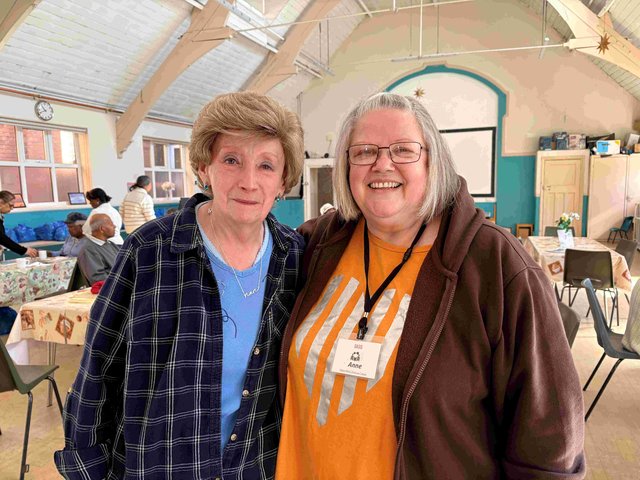
Looking back on her life, Anne can see God’s fingerprints everywhere.
“Even when I didn’t know Him, He was there,” she says. She often thinks back to the voice she heard at 12, letting her know she would one day be a great woman of God.
Now she understands what that means: humility, surrender, service, and deep dependence on Jesus.
“I hope to get there eventually,” says Anne.
To find out more about the Pioneer Scheme visit lcm.org.uk/immeasurably-more
LCM shares the gospel alongside the local church of London, equipping everyday Christians to lovingly bring a message of hope in Christ to those least likely to hear it.
Registered Charity No. 247186