‘The eye cannot say to the hand, “I don’t need you!” If one part suffers every part suffers with it; if one part is honoured, every part rejoices with it.’ (1 Corinthians 12: 21-26).
3. Count the cost
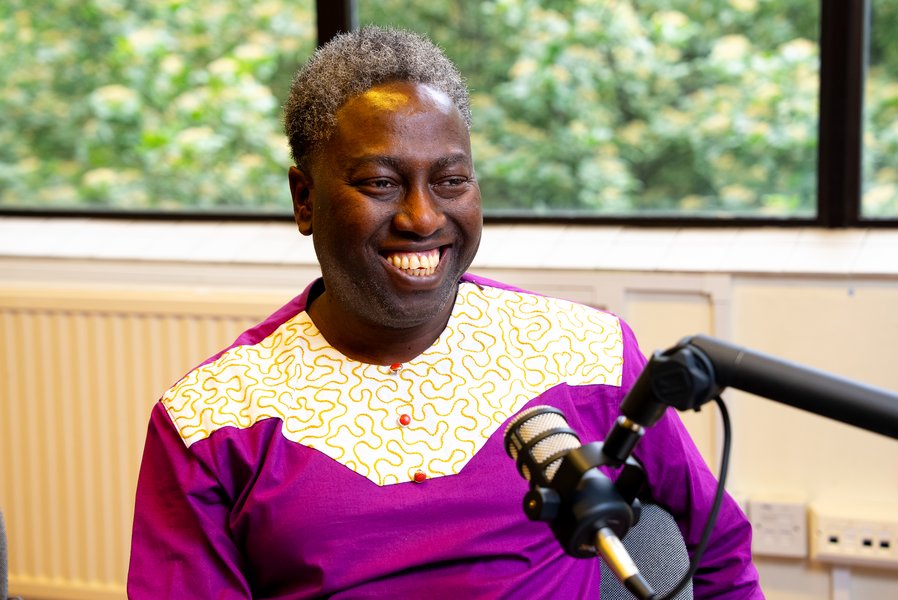
Intercultural church is beautiful, but it is not neat. As we discussed in the podcast, “Everybody’s going to be inconvenienced. Everybody will be changed. No one is left unchanged.” That is the reality.
Before we commit to going on a journey as a cross-cultural church, we must first ask ourselves: Have I counted the cost?
The blessing – a broader and deeper view of God’s kingdom – is often proceeded by sacrifice.
It may mean adjusting the way we preach, the examples we use, the assumptions we make about money or family or time. It may mean songs we do not know, accents we struggle with, leadership styles that feel unfamiliar. It may mean moments of discomfort – for everyone.
If we fail to count the cost, we can easily become discouraged by the growing pains, or the time it takes for change to occur. Being soberminded about the time and patience it takes to grow cross-cultural churches allows us to remain hopeful and resilient through change.
But this stretching is where the joy lies. Intercultural church is messy ecclesiology, but it is also fruitful. Because as we learn and unlearn together, as we allow ourselves to be changed by one another, we begin to see more of the fullness of God’s kingdom.
4. Allowing new voices to shape our imagination
In the episode I ask church leaders, “Which books are you reading? Who wrote those books? Are you only reading Western scholars and preachers?”
In the West, those in church leadership can often only read Western theologians and pastors. This is often completely unintentional. However, if all our theological influences come from one cultural stream, we will struggle to lead a church that reflects the nations God has brought to our doorstep.
Many of the things that we believe are ‘biblical’ perspectives on leading a church, are actually cultural.
Growing interculturally means broadening the voices that shape us. It means recognising that no one culture has a monopoly on Christian wisdom. When we allow African, Asian, Latin American, and other diaspora voices to shape our preaching, our worship, and our leadership, we begin to see the gospel with fresh eyes. We begin to see the church as a global body.
This is not about being tokenistic, it’s about being discipled by others, and allowing the whole body of Christ teach us.