

Blog

How to read the Bible with someone

Brother Mann

4 Jun 2026

Share 
Blog

How to read the Bible with someone

Share 

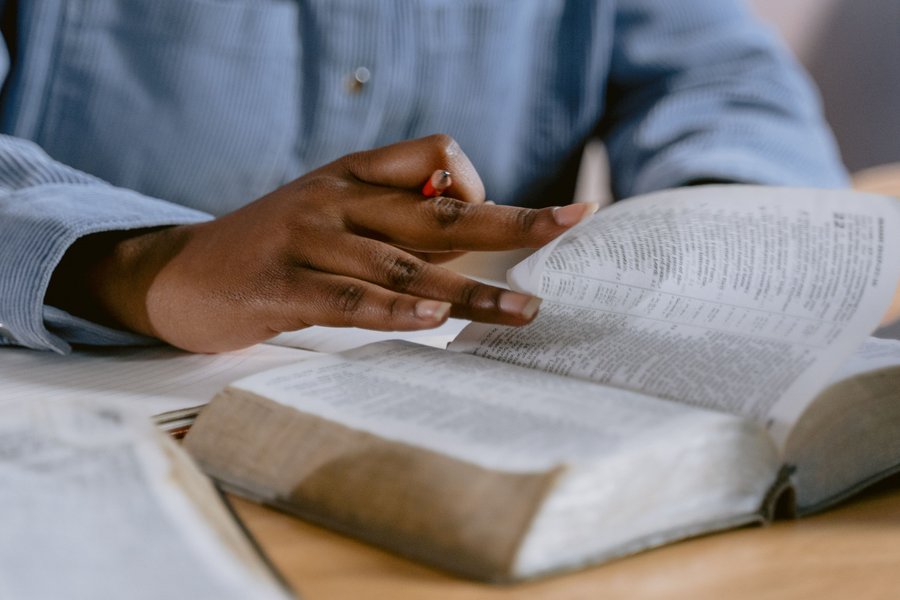
How do we begin to read the Bible with someone who is spiritually curious? Drawing on themes from the Everyday Evangelism podcast episode: "How to read the Bible with people" Missionary Team Leader Brother Mann shares five principles to help you confidently read scripture with someone.

You may have someone in your life right now who is spiritually curious – a neighbour who asks thoughtful questions, a colleague who is going through something difficult, or a friend who keeps circling back to conversations about faith. And you sense it – this might be the moment to offer to open the Bible with them.

But then the hesitation comes.

Where do I even start? What if I choose the wrong passage? What if they ask something I cannot answer? What if it feels like I am preaching at them?

Many Christians feels this. Yet Scripture has a way of speaking to people directly. As Hebrews reminds us, “the word of God is living and active… piercing to the division of soul and of spirit, of joints and of marrow, and discerning the thoughts and intentions of the heart” (Hebrews 4:12).

So here are five simple principles drawn from years of my ministry to people from Sikh, Muslim, and South Asian backgrounds – that can help you take that first step with confidence.
Begin where the person actually is

So where do we begin?

The Bible is 66 books long and knowing where to start can be the first obstacle. There is no one‑size‑fits‑all passage. But if you’ve begun to build a relationship with someone, you’ve probably already noticed something they keep coming back to – a question, a worry, a situation they’re trying to make sense of.

Start there. That’s often where their heart already is, and Scripture will feel immediately relevant.

It is much easier to invite someone to read the Bible with you if you already have a relationship and understand what they are currently facing.

One day I was at a book table – that we set up on the high street with literature about Jesus – when a gentleman, Mr Kishore, approached me with a problem. He shared that there was some spiritual activity in his house that he believed was a ghost, and he asked me, “Can you help me?”

I told him, “I can only tell you from the biblical perspective what is happening in your house.” So we opened the Bible and explained to him what Scripture says; that his ancestors' spirits cannot come to trouble him (Hebrews 9:27, 2 Corinthians 11:14, Mark 5). And then we prayed for him.

We simply began where he was. Whatever the topic – whether it is spiritual activity, finances, or forgiveness – the Bible usually has something to say.

Create a relaxed, unhurried environment

In our home, we run a Bible study specifically for people who are beginning to show interest in Scripture. As a rule, our meeting never starts straight away with Bible study or prayer. It always begins with a meal.

For many – but especially for those who come from South Asian cultures – eating together is an important part of hospitality. It slows the pace. It creates an environment where people can relax, and nobody is in a hurry to go home to cook dinner.

Jesus often ministered around meals. He “broke bread” with people and was so known for eating with people that the Pharisees accused him of being a “glutton” (Matthew 11:19).

Hosting meals is becoming a lost art in Western culture, but it makes a difference. And if a meal is not possible, hosting someone for tea – or even going to a café and saying “coffee is on me” can go a long way.

Read the Bible with them, not at them

It is important to remember that when we open the Bible with someone, we are not reading for people – we are reading with them. It is not student and teacher; it is two people sitting at the feet of Jesus.

As you read, it can be helpful to get their impressions first. You can start by asking questions like: What do you think this passage is saying? What stood out to you?

After discussing together, you can share your reflections and explain what the Scripture says – especially if it differs from their interpretation. This is where it may be useful to study the passage beforehand.

You can also answer any questions they have and end by praying together. It reminds us that God is the one who gives understanding.

t is not student and teacher; it is two people sitting at the feet of Jesus.

Trust the Holy Spirit to work through the Word

“But what if someone has a question about Scripture that I do not know the answer to?”

It is tempting to believe that reading the Bible with someone requires you to have all the answers, but these are the moments when we lean on the power of the Holy Spirit.

When we sit with someone and read Scripture, it is like the divine speaking to them through the words on the page.

This was Mr Kishore’s experience. After several Bible studies, he eventually came to me and said, “I want to be baptised.”

It wasn’t because I had all the answers. It was because God was at work.

If you don’t know something, you can research, pray, and return to it later. Many people come to know Jesus without having all their questions answered. The journey of understanding Scripture never ends.

Let Scripture speak into their cultural insight

Everybody reads the Bible through a cultural lens.

Working with South Asians – and having grown up Sikh in India – I’ve seen how deeply people respond to the Bible’s collective language. Scripture is written in an honour-shame context, and it often speaks in terms of we rather than I.

Isaiah 53:6 says, “we have all gone astray”, and Romans 3 speaks of “all of us” as sinners.

This resonates strongly with people from collective cultures, like South Asians. It doesn’t point at others saying, “You are a sinner, and I am a righteous man.” No – the message is that all of us are sinners in need of God’s grace.

Sin and shame have been defeated on the cross for all. And by putting our faith in Jesus, we can all be adopted into his family.

Being sensitive to someone’s cultural background can therefore help you understand how Scripture might speak into their particular situation.

Taking a step

Reading the Bible is a journey you take with people – and it is a beautiful journey. So, I encourage you to take that first step of faith and invite someone you know to read with you. And let God guide you through the rest.

To explore in more depth on how we can read the Bible with someone – including how we can make that first invitation, listen to the Everyday Evangelism episode: “How to read the Bible with people”, or watch below. We’re joined by Brother Mann and Field Director Charlotte to deep dive into this transformative habit.

S3 E2: How to read the Bible with People


Written by: Brother Mann

Brother Mann was born into a devout Sikh family in India, but at the age of 18 he became a follower of Christ. He joined London City Mission in 2022 to work as a missionary team leader in Hounslow, London. "I am passionate about seeing every Sikh hear the gospel in simple words that will make sense to them so that they have an opportunity to make Jesus the king of their lives", says Brother Mann.

Find out more about Brother Mann
Share