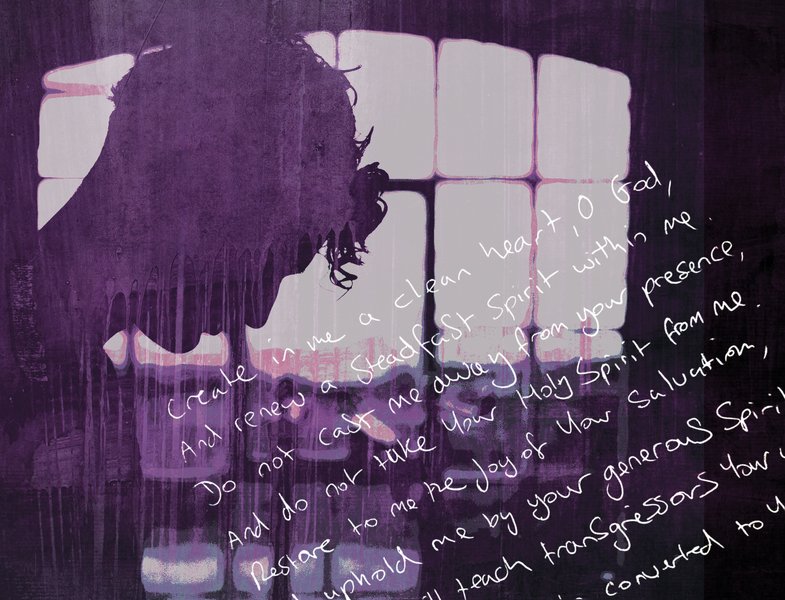



Words are powerful, and God’s Word has the power to change lives. This is how poetry based on the Psalms and Proverbs is being used to point people to Jesus in prisons.

Words are powerful, and God’s Word has the power to change lives. This is how poetry based on the Psalms and Proverbs is being used to point people to Jesus in prisons.
Inside one of London’s prisons, something unexpected is happening. Men who once carried anger, fear, or deep uncertainty now sit quietly with open Bibles and blank notebooks — writing prayers, poems, and letters they never imagined they could.
Some take their journals back to their cells and continue writing for hours. Others have begun offering wisdom to younger offenders, hoping to steer them away from the path that brought them here.
For many, this simple act of putting words on a page is becoming a lifeline — a way to process their stories, imagine a future different from their past, and even connect with Jesus.
This is the impact of a poetry workshop run inside the prison in collaboration with The Psalmists (founded by poet Joshua Luke Smith) and London City Mission.
Drawing on Psalms and Proverbs, the workshop has become a place where men who might never open up in other settings have found the courage to write honestly about their lives, regrets, emotions, and hopes.
There is a Bible study woven into each session, seeking to show how Jesus is present throughout the Psalms and able to bring hope in every struggle and temptation.
“In most sessions, we come back to the baptism of Jesus and His time in the wilderness. We do this to show that Jesus understands what we all go through, and that we are loved by God even though we may be in prison,” explains Luke, LCM team leader.
“They listen. They focus. And when it’s time to write, the room falls silent. Even men who used to disrupt are fully engaged. It’s incredible to witness.”
“They listen. They focus. And when it’s time to write, the room falls silent."
For Jasmin, a member of The Psalmists team, poetry is a way of speaking into chaos and offering hope in places marked by despair.
“At the beginning of each session, we use a simple tool that helps participants slow down and name the emotions they are feeling,” Jasmin explains.
“For many, this is the first step in recognising what’s happening within their own souls.
It’s not unusual for someone to choose a word like “anxious.” As part of the exercise, the men are invited to describe their emotions more fully — not just naming them, but exploring what they feel like through poetic language.
What does the emotion feel like, sound like, or taste like? One participant described it this way: “The anxiety feels like a beating drum.”
“I’ve seen men become emotional as they find the words to describe what they’ve been carrying. Often, the right language helps something important rise to the surface.”
"The men are invited to describe their emotions more fully — not just naming them, but exploring what they feel like through poetic language."
Each man receives a journal embossed with the words “Guard your heart.” Many fill theirs quickly.
“Some write prayers, some write poems, some write letters to loved ones,” LCM team member Becky explains. “They’re engaging creatively with their emotions, their thoughts, their faith — often for the first time in years.”
“They’re engaging creatively with their emotions, their thoughts, their faith — often for the first time in years.”
The course is open to anyone wanting to explore faith — whether a long-term Christian or someone curious about Jesus. Becky and Luke sit among the men, writing and praying with them at each session.
A powerful outcome emerged when the men began writing letters inspired by Proverbs that begin with “My son…”
“Many of the older men realised they had so much wisdom to offer younger ones,” Becky says. “So they started writing letters to young offenders — guidance drawn from Scripture and from their own lived experience.”
These letters are raw, honest, and often marked by deep regret, but they’re not without hope.
Becky remembers sitting beside a man who had just received a very long sentence. She encouraged him to write to his son.
“He said, ‘I don’t have any advice. He’s excellent.’ He was so proud. So I asked him instead what he wanted to say to his son now.”
What followed was a tender, heartfelt letter — a moment of reconnection that might never have happened without the course.
“You often see emotion break through as they speak or write,” Becky says. “You hear their hopes, their desire to choose the right path, even knowing it won’t be easy.”
What followed was a tender, heartfelt letter — a moment of reconnection that might never have happened without the course.
Becky’s prayer is simple:
“Please pray that the men keep journaling. That when their heads spin, these men will turn to Scripture and write down what they are going through — because often, writing brings clarity.”
The men are not just completing exercises; they are learning a spiritual discipline that can give grounding, peace, and direction long after the workshop ends.
“The real power of this course is that it brings Scripture to life and helps men engage with lament as well as hope as they reflect on their own lives,” says Luke.
In a prison where despair can often overshadow hope, men are discovering God’s Word in a new way — through creativity and reflection.
“It’s beautiful to see,” says Becky.
We are grateful to everyone who has donated so generously to the Easter Appeal in support of our work with people on the margins.
If you want to help share the gospel in London and beyond, please visit lcm.org.uk/give. To find out more about The Psalmists, visit thepsalmists.org
LCM shares the gospel alongside the local church of London, equipping everyday Christians to lovingly bring a message of hope in Christ to those least likely to hear it.
Registered Charity No. 247186