Crossing barriers for the sake of the gospel
Reaching people on the margins will always require intentional barrier-crossing.
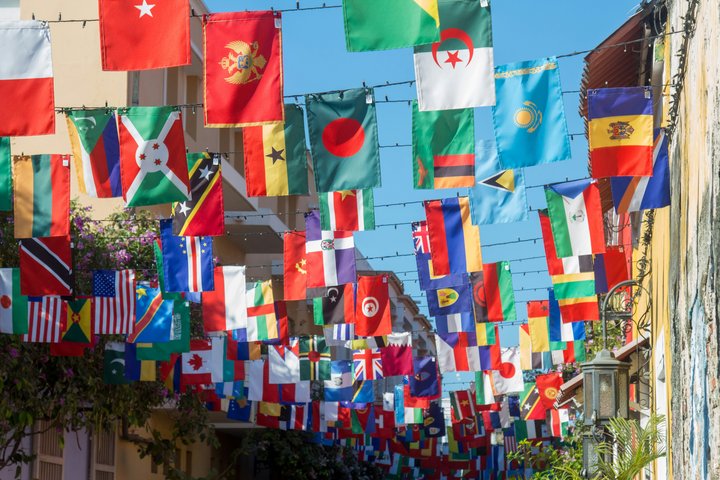
Sometimes those barriers are obvious: language, legal status, trauma, or cultural difference. During Refugee Week, we are reminded of the immense courage required for individuals to leave everything behind and begin again in a foreign land. As the Church, we must ask: are we willing to demonstrate a corresponding courage in response?
But sometimes the barriers can be more subtle.
They are the invisible lines of routine: where would we naturally gravitate towards those like us? They are the internal hesitations: where might we be tempted to say, “someone else is better placed to do this?”
They are the quiet assumptions: the belief that mission belongs to specialists rather than the whole of God’s people. They are the subtle prejudices: the unconscious fear that someone may not ‘be allowed’ to be here to hear the gospel.
If the gospel truly matters, then overcoming these barriers is not optional. It is essential.
And yet the beauty of this calling is that it does not demand uniformity. Reaching the margins doesn’t look the same everywhere.
One gospel, many expressions
Across London, we see this lived out in diverse and creative ways.
In one context, it may look like building friendships with refugees through English conversation classes or offering practical support with paperwork, such as forms, job applications, bills... Perhaps creating spaces where stories can be shared, dignity restored, and the person of Jesus gently introduced.
In another, it may involve long-term presence on housing estates, where trust is built slowly, and gospel conversations emerge through relationships.
Elsewhere, it might mean engaging those of other faiths with humility and clarity, taking time to understand deeply held beliefs while bearing witness to Christ with conviction and grace.
These expressions are different, but they are united by a single conviction: that no one is beyond the reach of the gospel, and no context is beyond the scope of God’s mission.
This is what it means to go to the margins: not simply to serve, but to proclaim; not only to meet immediate physical needs, but to point to eternal hope.
The Church’s moment
Refugee Week provides a timely prompt for the Church to reflect on its calling.
Will we settle for awareness without action?
Will we admire the courage of others without exercising our own?
Or will we recognise that this is a moment of invitation, a moment to step more fully into the mission God has already given us?
The reality is that many churches want to engage but feel ill-equipped. The desire is there, but confidence is lacking. Questions remain: Where do we start? How do we do this well? How do we share the gospel with sensitivity and boldness?
This is where partnership becomes vital.
A call to partnership
At London City Mission, our vision is to ignite a movement of mission in the local church to reach people on the margins of the capital. We believe that the Church is God’s primary means of mission, and our role is to serve, equip, and strengthen that mission.
We do this by training and supporting ordinary Christians to share the extraordinary message of Jesus in their everyday contexts.
Because the task is too great – and too important – for any of us to approach alone.
This Refugee Week, my invitation to churches is simple:
Take the next step.
Explore what it could look like for your church to be more intentionally engaged with those on the margins. Consider how you might grow in confidence, clarity, and compassion as you share the gospel. And don’t do it in isolation; partner with others who can help you on the journey.
You can find out more about how your church can be equipped for this at: www.lcm.org.uk/your-church
Because the gospel matters
Ultimately, this is not about programmes or strategies. It is about people.
People made in the image of God. People with stories of loss, resilience, and longing. People who, like all of us, need the hope only Jesus can bring.
During Refugee Week, we rightly celebrate courage. But as followers of Christ, we are called to something even deeper: to be courageous carriers of true hope.
So let us go. Across barriers, beyond comfort, and into the places where hope seems distant.
Because often, those without hope are closer than we think.