Blog

Fear, Knife Crime, and the Hope the Church Can Offer

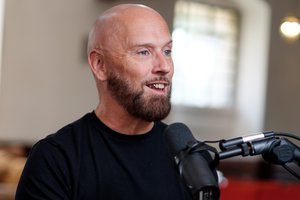
Jason O'Shea

25 Feb 2026

Share 
Blog

Fear, Knife Crime, and the Hope the Church Can Offer

Share 

Jason O’Shea shares an urgent call for the Church to respond to rising knife crime in London and bring hope to children and communities.

A schoolboy attacking other students in what is usually the safety of a classroom. Two children stabbed, and dozens more left traumatised after witnessing — or simply being close to — something so horrific.

In recent months it seems like every week brings another tragedy. A fatal stabbing in Feltham in January. A 16‑year‑old stabbed on a bus at 2pm on a February afternoon. And on Valentine’s Day, two more fatal attacks — one in Peckham and one in Croydon — with two others injured. All knife attacks. All children.

Our hearts go out to the parents, the families, the friends, and the communities.
But the ripple effects stretch so much further than most people realise. Trauma spreads fast. Even hearing these stories on the news can leave us feeling overwhelmed.

We are encouraged that homicide rates have fallen to the lowest level in a decade, and that recorded crime involving bladed objects reduced by 5.7% in 2025. But the wider picture isn’t good. Knife crime has been rising since 2016, dipping only during lockdown, and reaching a peak in 2024 with 16,585 recorded incidents.

No wonder so many people feel hopeless — sick and tired of being sick and tired of hearing these stories.
Who is to blame? Why aren’t the people in power dealing with this? Why is this happening? If you’ve asked these questions, you are far from alone.

Knife crime has been rising since 2016, dipping only during lockdown, and reaching a peak in 2024 with 16,585 recorded incidents.

Fear — the word we hear again and again

We regularly go into primary schools alongside local churches to deliver Operation Forgiveness – an early intervention knife-crime prevention programme.

In almost every session, the same word comes up: fear.
Our young people — from every kind of background — are genuinely scared.

When we ask, “Why do some children carry knives?” they answer instantly: “For protection.”

We’ve reached a point where children you would never imagine carrying a weapon now feel they have to — just to feel safe. And yes, children in primary school have been caught bringing knives into school.

But the story doesn’t stop there.

It goes deeper than fear

"In almost every session, the same word comes up: fear."

When we look at the drivers behind violence, poverty and trauma stand out again and again.
One report found that more than 90% of young violent offenders had experienced childhood trauma.

Young people need reassurance. They need hope. They need to feel safe and secure.

In our primary school sessions, around 99% of children can name a trusted adult — someone they could go to if they felt scared or worried. We tell them plainly:
If you ever feel so frightened that you think you need to carry a weapon, tell that trusted adult.
No child in the UK should ever feel their life is at risk.

But for many teenagers, that safety net doesn’t feel real. By secondary school the world is harsher, busier, more complicated — and young people often feel they’re facing it alone.

A call to prayer

We agree with you: this is too much. Something must change.
And the Church has a part to play — a crucial one.

"This isn’t someone else’s problem. This is our moment to respond with courage, compassion, and faith."

Pray for our young people.
Pray for those who might be drawn into violence.
Pray for families grieving unthinkable losses.
Pray for professionals — teachers, youth workers, police officers, medics — who step in every day to protect young lives.
Pray for forgiveness to overcome the pull of vengeance, so grief doesn’t spiral into more violence.

During World War II King George once called the entire country to a day of prayer— and saw miracle after miracle, including the evacuation of over 300,000 soldiers from Dunkirk – despite an estimation of approximately 40,000 at best. Church bells rang on a Sunday and Primary Schools prayed and sang worship together.

What would it look like to come together to pray for our nation again?

It doesn’t have to be as big as it was in 1945, but what would happen if we all got together to pray for our young people. We’ve produced these prayers to help you.

But beyond prayer, there is so much more we can be doing…

“After that whole generation had been gathered to their ancestors, another generation grew up who knew neither the LORD nor what he had done for Israel.”

Judges 2:10 (NIV)

Early intervention

There is a massive need to reach our young people now.

According to the Home Office, early intervention is one of the most effective ways to prevent violence.
It makes sense — if trauma has knocked a young person’s life off course, then coming alongside them with tools, guidance, and genuine care can reset their trajectory.

And the Church is in a unique position to do this.

Because the Church is more than a service provider — it is a family.
A place of belonging. A place of safety.
And ultimately, a place where a young person can discover the truest security of all: the God who never leaves, never changes, and never stops loving them.

So, what can we do as a church?

We can open your hearts: These are our children — people made in God’s image. Loved by Him. Entrusted to us.

We can open your buildings: We have resources, invite the children and young people in, where possible open youth clubs, after school clubs, incorporate the young people into your Sunday gatherings giving them responsibilities that brings ownership and belonging.

And we can open your hands: Support those reaching young people on the frontlines. Support missionaries, churches, and initiatives making a real difference.

This isn’t someone else’s problem.
This is our moment to respond with courage, compassion, and faith.

If you’re wondering what early intervention might look like in practice, we’d love to share what we’ve been learning.

At London City Mission, Operation Forgiveness works in primary schools to help children process fear, understand forgiveness, and build resilience before they face the pressures of adolescence. It’s just one example of how the Church can step in early, offering safety, wisdom and hope.

If your church has a heart for this, or if you want to explore how you might get involved with children in your area, we’re always glad to talk – whether about Operation Forgiveness or other ministries across London. Click here to find out more and get in touch.


Written by: Jason O'Shea

Jason works as the Ministry Leader for the Operation Forgiveness team; an early intervention knife-crime and youth violence initiative that equips young people with the power of forgiveness.

Share